It’s the question everyone wants to ask and almost nobody does: what does an interior designer actually cost? People will happily discuss the price of a kitchen or an extension, then go quiet when it comes to design fees, as though asking might be rude.
It isn’t. It’s the most sensible question you can ask, and I’ve always thought a designer’s willingness to answer it plainly tells you a great deal about how they’ll handle everything else. So here is an honest guide to what interior design costs in Cheshire, what sits inside a fee, what sits outside it, and how to arrive at a number you’re genuinely comfortable with before you speak to anybody.
The three ways designers charge
Almost every quote you receive in Cheshire will be built on one of three structures, and knowing which one you’re looking at is what makes two proposals comparable.
A fixed design fee is a set price for a defined scope of work. You know the figure before anything begins, which is why most homeowners prefer it, and it’s what we use. It relies on the scope being properly pinned down first, which is exactly what an initial design meeting is for.
An hourly rate is charged for time spent. Across the North West you’ll typically see somewhere between £75 and £150 an hour, rising well beyond that for London studios. It works nicely for a few hours of advice on a room you’re mostly handling yourself. It’s harder to live with across a whole house, because the final figure isn’t knowable at the start.
A percentage of the project budget charges the design fee as a proportion of what’s being spent on the work, usually somewhere between 10 and 20 per cent. It’s common on large renovations where the scope genuinely evolves. The thing to watch is that the fee rises as the spend rises, so ask how it’s capped.
What you’ll actually see quoted in Cheshire
Every house is different, and no honest designer can quote you from a blog post. But as a guide to what’s normal around here, so you’re not going in blind:
- A single, considered room, designed properly with bespoke elements, commonly lands somewhere between £2,500 and £6,000 in design fees.
- Three or four connected rooms, the sort of ground-floor project taking in a kitchen, a living space and a hall, often sits between £6,000 and £18,000.
- A whole house, designed and managed from concept through to handover, generally starts around £15,000 and rises with the size and ambition of the home, comfortably past £50,000 on larger properties.
- An initial design meeting or first visit, where one is charged, is usually between £150 and £450.
Treat those as the shape of the market rather than a price list. What they’re useful for is sanity: if a quote lands a long way outside them in either direction, it’s worth understanding why.
Why Cheshire sits where it does
Design fees here tend to sit above the national average and well below central London, and there’s a straightforward reason for it.
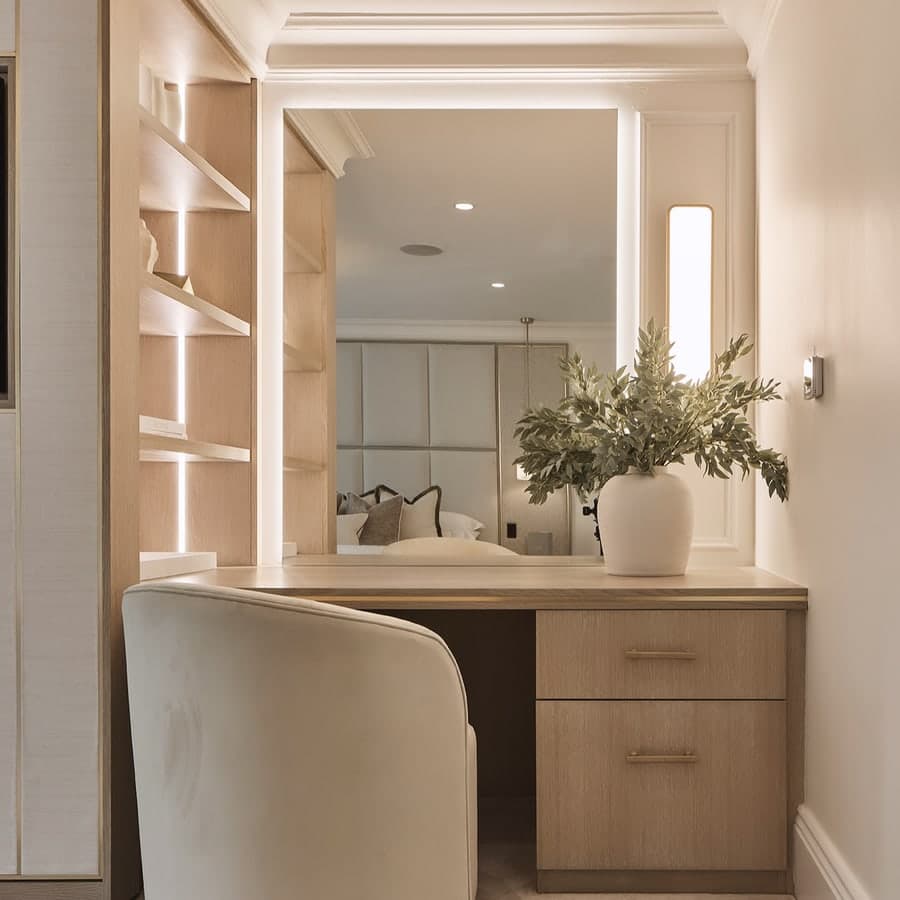
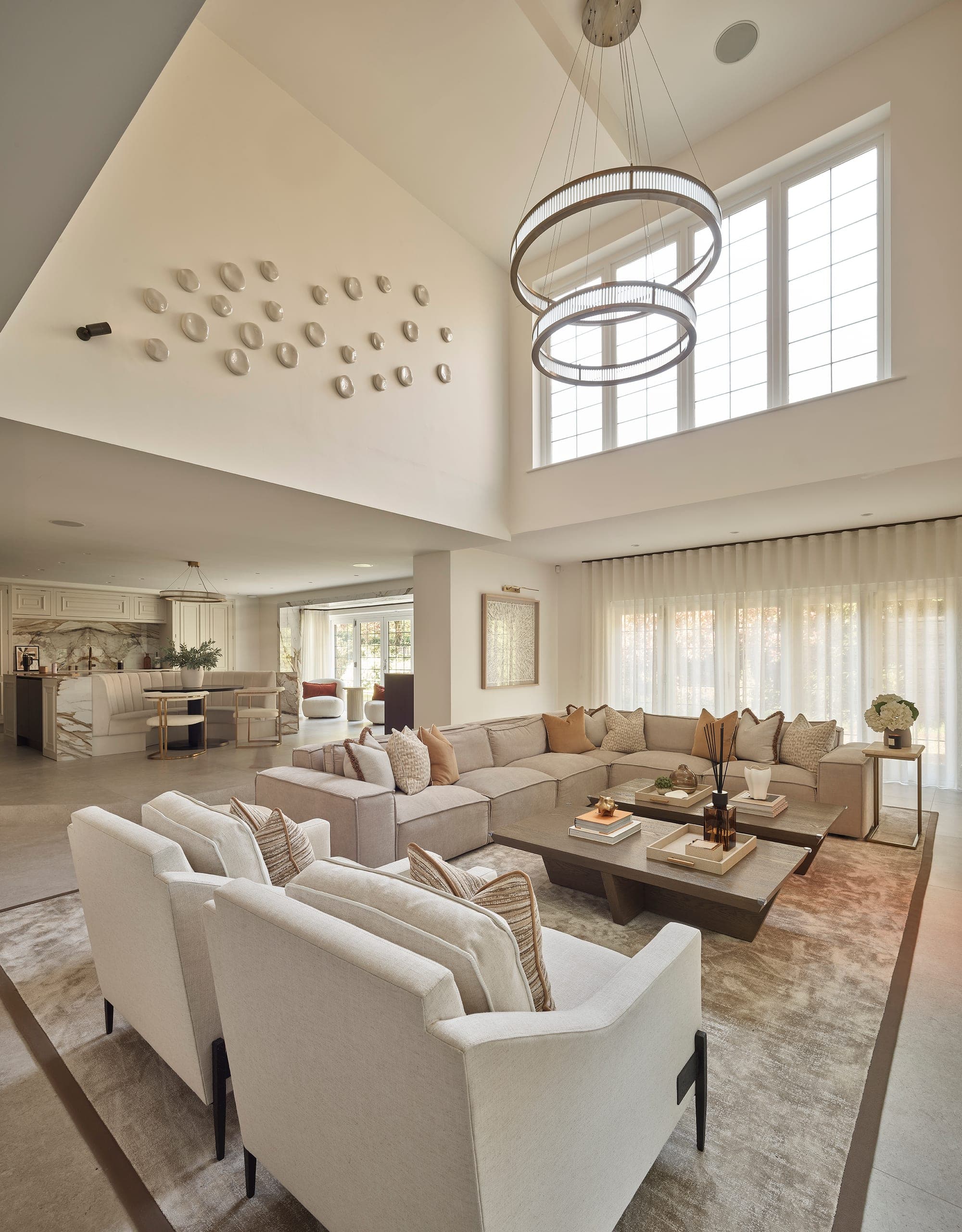
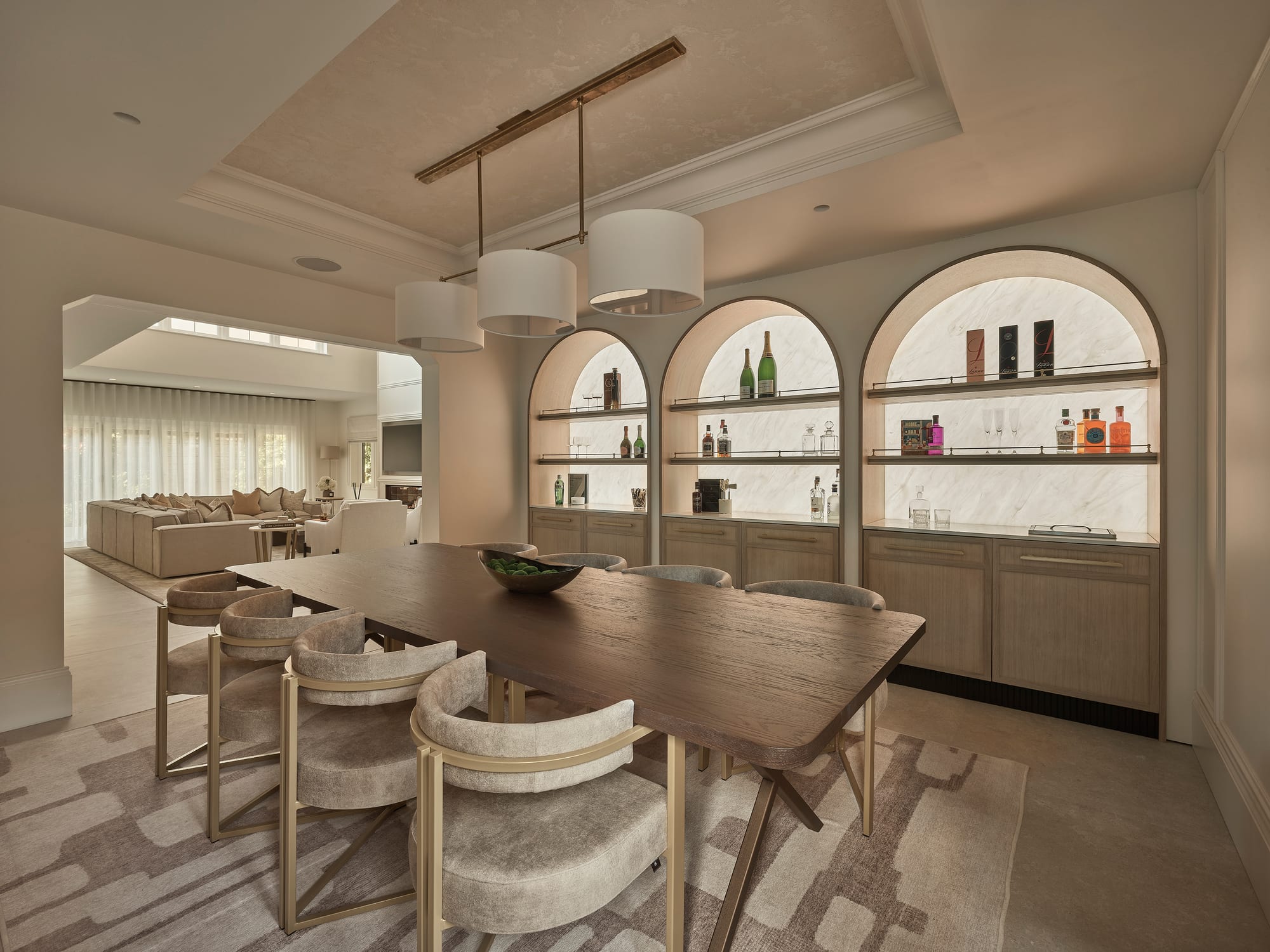
The houses. Around Hale, Bowdon and Altrincham you have substantial Victorian and Edwardian homes that reward a careful, considered approach and involve a great deal of made-to-measure work. Around Prestbury, Alderley Edge and Wilmslow there are large detached houses and high-specification new builds where the expectation is bespoke joinery, natural stone and properly designed lighting throughout.
None of that is off-the-shelf work, and it’s the bespoke content of a scheme, more than anything else, that sets the fee. A Cheshire project simply tends to carry more of it.
What actually moves the number
When people see two very different quotes for what sounds like the same job, it’s almost always down to these.
- How much is bespoke. The biggest driver by a distance. Made-to-measure joinery, a hand-made kitchen, panelling and natural materials all take design time, drawings and coordination with makers. It’s also where the value sits, because it’s what makes a house feel finished rather than furnished. I’ve written separately on whether bespoke joinery is worth it.
- Scope. One room or a whole house, and whether there’s structural or building work running alongside the design.
- The level of finish. Stone, bespoke metalwork and specialist decorative finishes carry a premium, because they take more skill and more care to specify and deliver.
- How much management you want. Design only, for you to deliver yourself, costs less than design plus the coordination of every trade and maker. The second is a great deal more of our time.
- The state of the house. A property going back to brick needs decisions on everything. A house that only needs its ground floor rethinking needs fewer.
What a design fee includes
This is where quotes differ most, so compare carefully. On a full-service project with us, the fee covers space planning and layouts, concept and mood direction, colour and material selection, bespoke joinery design, lighting design, sourcing and specification, the drawings your builder works from, and the coordination of trades and makers through to styling and handover.
Put plainly, it covers the thinking, and the running of the project.
What a design fee does not include
Here’s the part I’d most like people to understand before they start, because getting it wrong is what derails budgets.
The fee is not the cost of the house. It doesn’t include your furniture, your joinery, your kitchen, your stone, your lighting, your curtains, or any building work. Those sit in a separate budget, and that budget is almost always the larger of the two by some margin.
So when you’re planning, hold two numbers in your head: what you’ll spend on the work and the pieces, and what you’ll spend on having it designed and run properly. A designer who lets you blur the two isn’t doing you a kindness.
Two more worth asking about outright: whether a quote includes VAT, and how procurement works, meaning whether the studio buys pieces on your behalf and on what terms.
How we charge at Cheshire Property Studio
We quote every project individually, because no two homes or briefs are alike and I’ve never believed in pretending otherwise.
It starts with a complimentary discovery call, a relaxed conversation about your home, your project and what you’re hoping for. There’s no obligation and nothing to pay. If it feels like a good fit, the next step is a £180 initial design meeting, at your home or our studio on Ashley Road, where we walk the space properly and give you an expert read on it. Afterwards you receive a tailored proposal setting out the scope, the stages and the fee, so you know precisely what you’re committing to before anything begins.
For something smaller, our online design service gives you the studio’s full design direction to deliver yourself, quoted to the room and the level of detail you need. You can see how the whole process works on our how we work page.
Why a designer often costs less than not having one
This is the part people don’t expect. The usual worry is that a designer simply adds cost, and in practice it’s frequently the reverse.
A problem spotted on a drawing costs nothing to fix. The same problem once the walls are up costs thousands. Add to that knowing where to invest and where to hold back, and access to trade suppliers and craftsmen you wouldn’t find on your own, and the savings across a whole project very often exceed the fee itself. It’s the same argument as starting early, and it’s why the expensive projects are so often the ones that were planned late.
So what should you budget?
My honest advice, and I give it on almost every discovery call: settle on a number you’re genuinely comfortable with, then say it out loud at the first conversation.
A good designer will tell you kindly and clearly what’s realistic for that figure, and where to concentrate it for the greatest effect. Keeping your budget to yourself feels safer, but it only means nobody can help you spend it well, and you’ll spend the next three meetings looking at schemes that were never going to happen.
If you’d like a straight answer about what your own project might involve, book a discovery call. It’s free, there’s no obligation, and you’ll come away knowing a great deal more than you did.